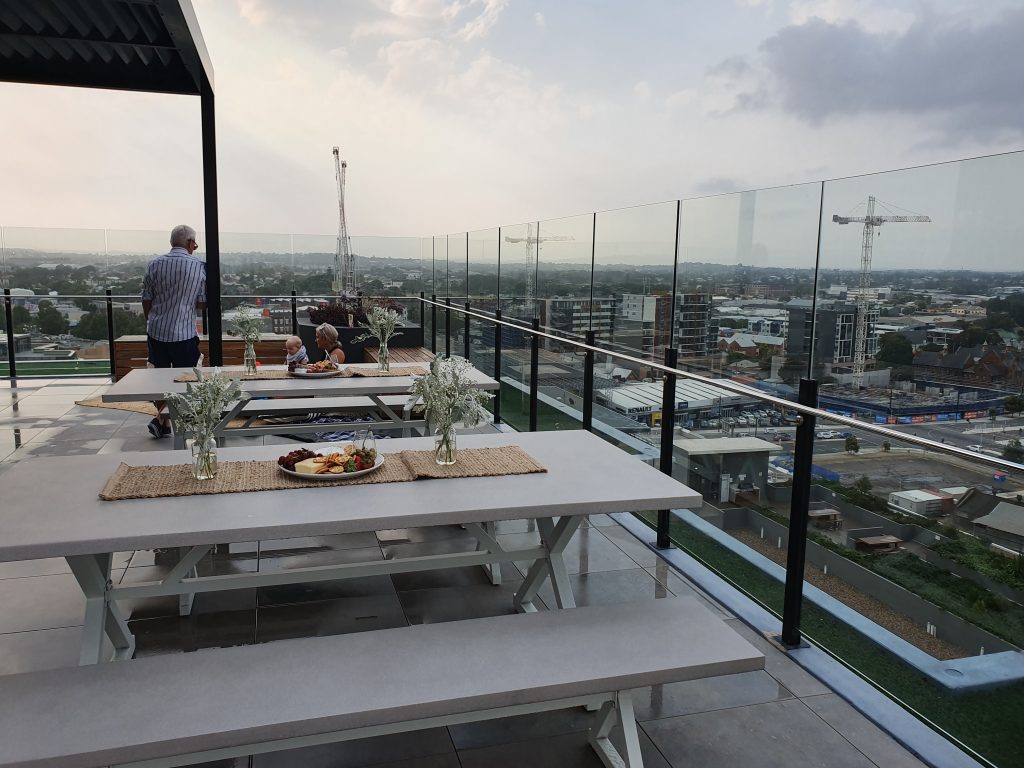
The rooftop at GWH Aero Apartments all decked out for a birthday party.
When we are involved from the early stages of a development (planning phases into registration/settlement and occupation), we have a role and responsibility in helping that community find its feet and activating the space that we manage. This is somewhat the case when we have the strata management of that community (i.e. a role largely offsite and administration based), versus when we are the building/facility manager – a role which is a daily/weekly in-person interface with the owners.
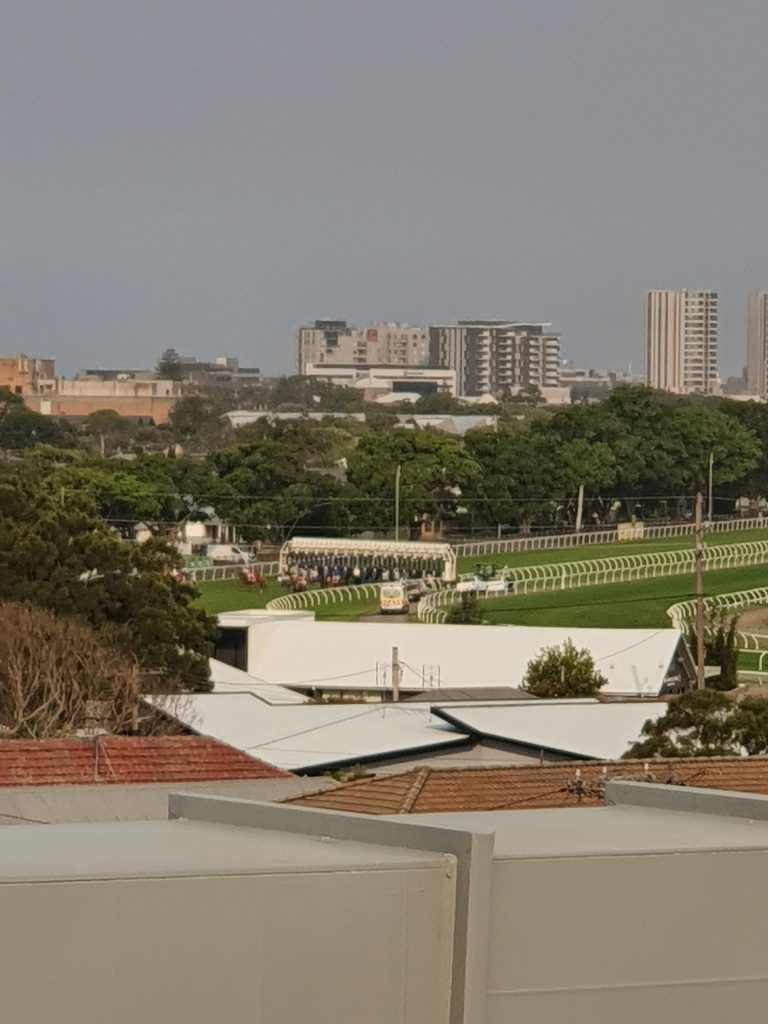
The view of Broadmeadow Racecourse from the rooftop at GWH Centrale Apartments Broadmeadow.
Modern design principles for apartments and community schemes (at least in Australia) give drive to the creation of a community and giving a building identity. This may include features (e.g. vertical garden, civic art), exclusive common areas (rooftop entertainment areas, gardens), naming the building or facilities (gyms, pools, treatment rooms, BBQ areas, concierge, valet, etc.) and nearby or inhouse retail offerings. Activated communities are safer, more secure and more enjoyable to reside in.
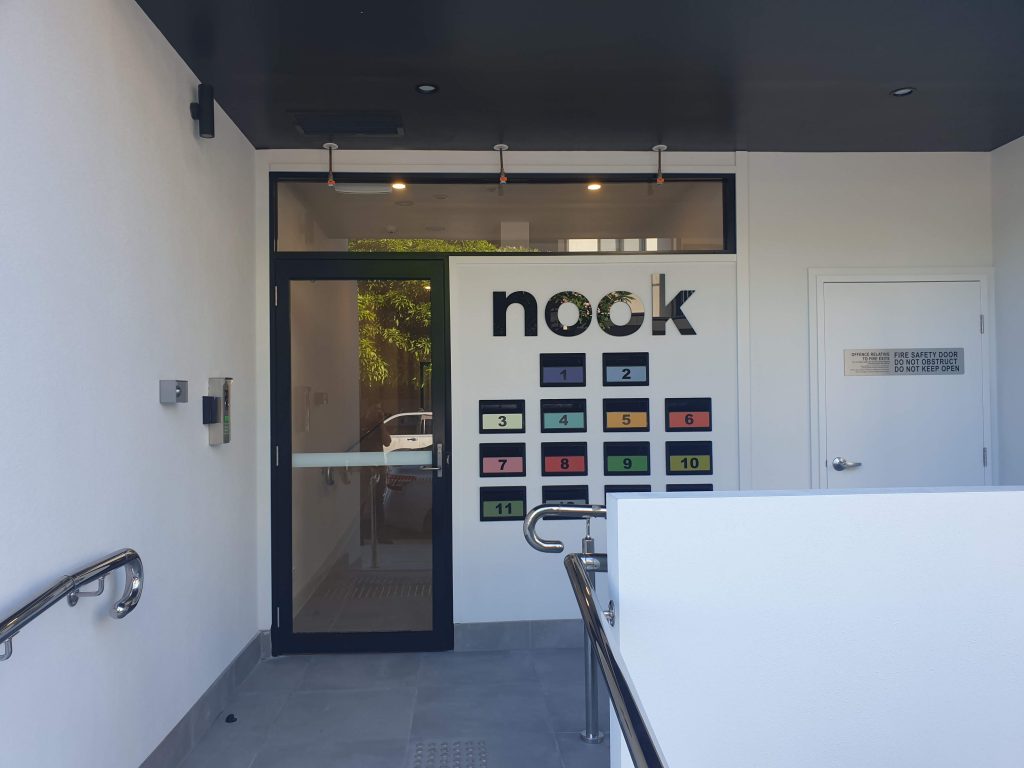
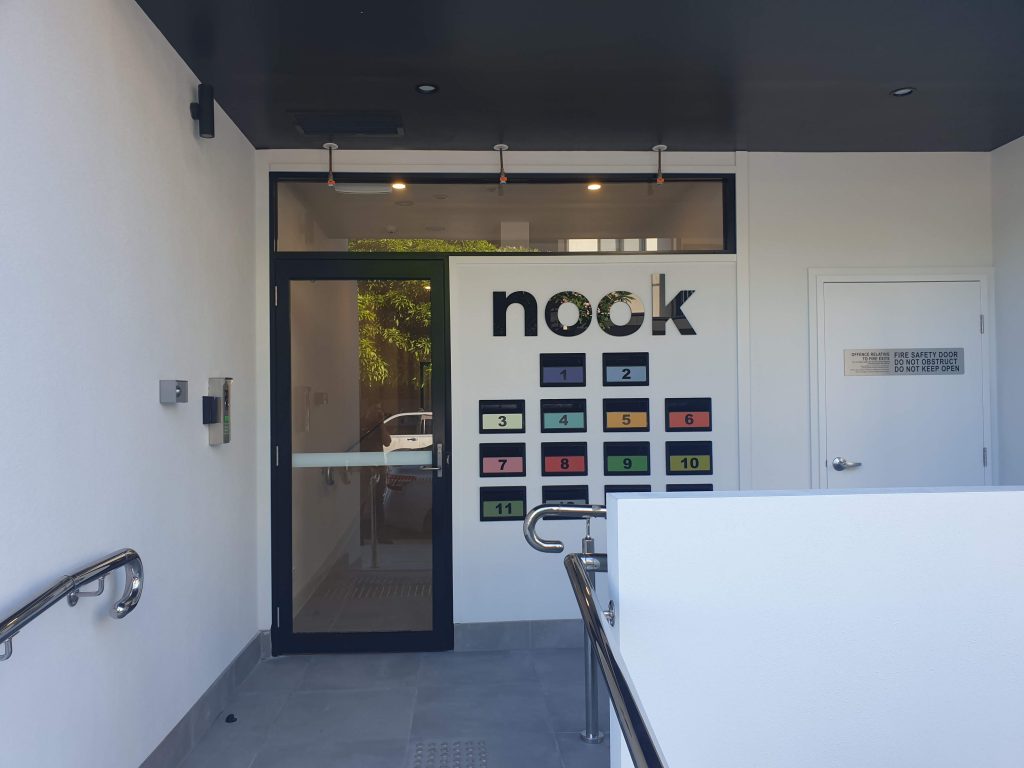
‘nook’ letterboxes – the colour coded theme continues throughout the building and helps make it a unique boutique development for the area.
Unless all of the above is well-considered, facilities may end up poorly utilised and not add value to the community. On the flip-side, beautiful common areas can be an extension of lot living space, allowing room for entertainment, recreation and community activities. These spaces end up being the ‘jewel’ in the crown of a specific development.
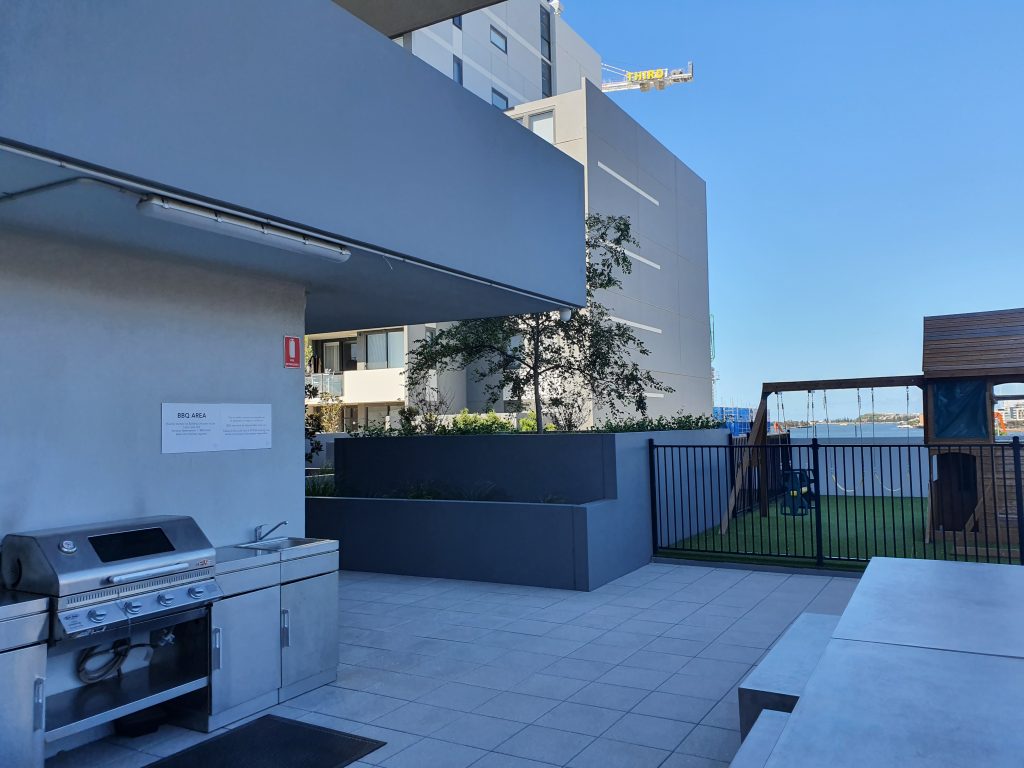
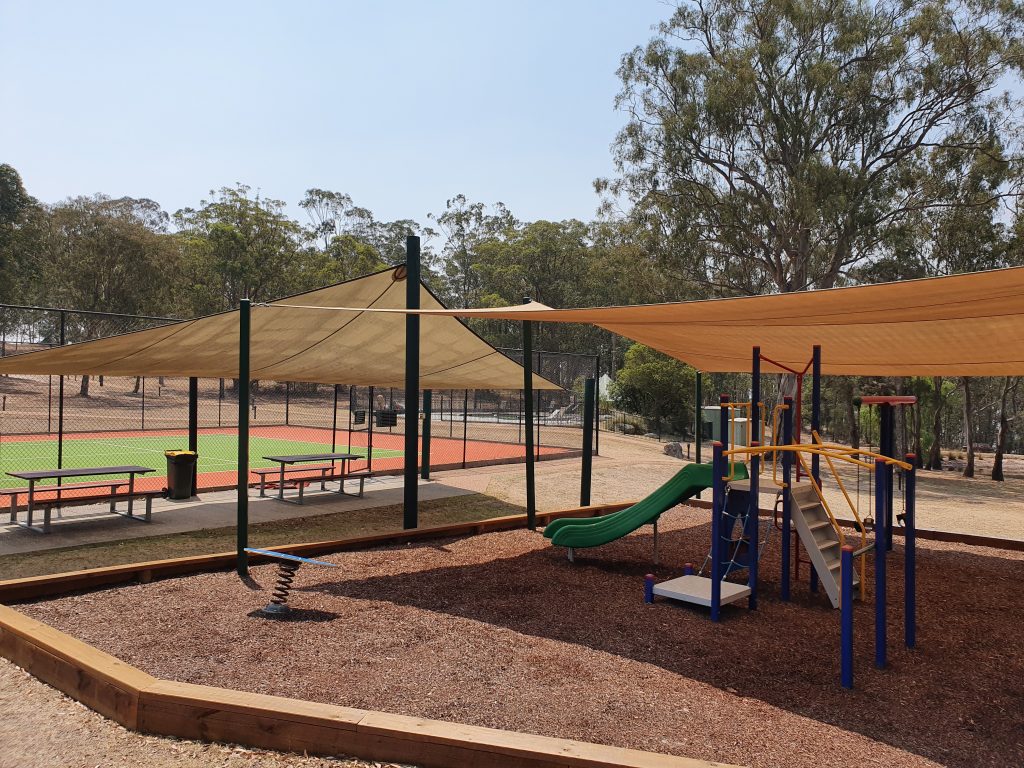
Playground and BBQ area with a view at Thirdis beautiful ‘Westend’ development, proudly managed by Cambridge Management Services
We have a wealth of examples of these ‘activated communities’ within our portfolio and in time, we will have great data as to how this drives improved sales values, rental yields and resident happiness.
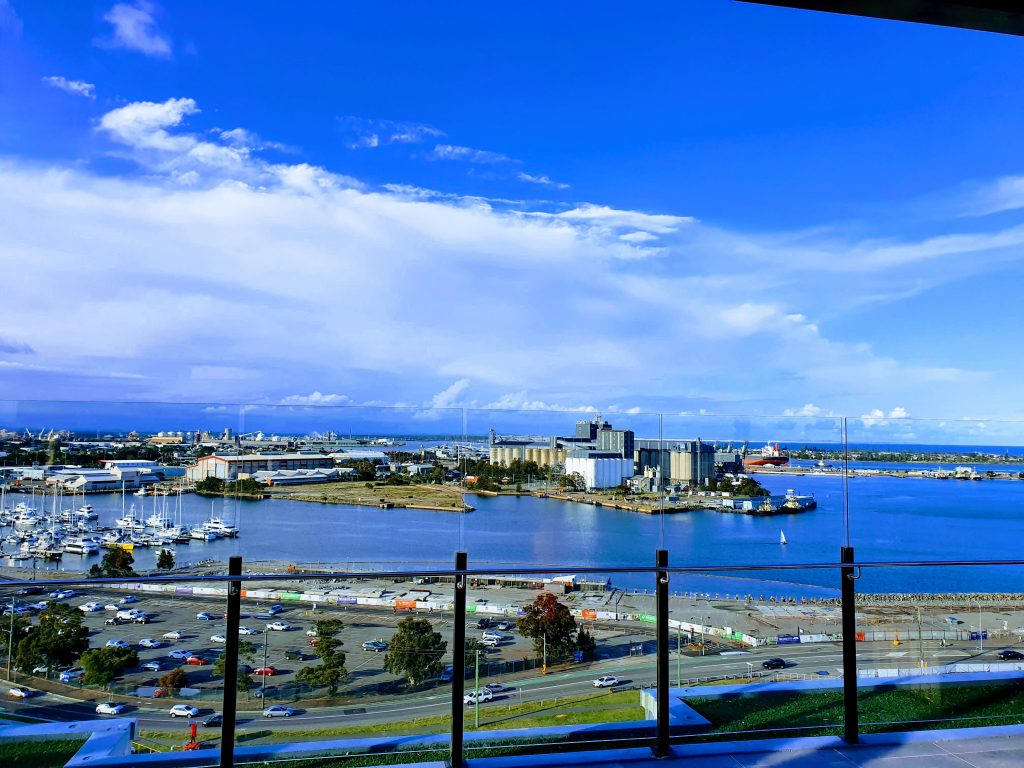
Views from the Aero rooftop – always changing courtesy of the working harbour
Regardless of facilities, we think that all communities have the ability to take advantage of the density and the ‘just add water’ community that this provides.
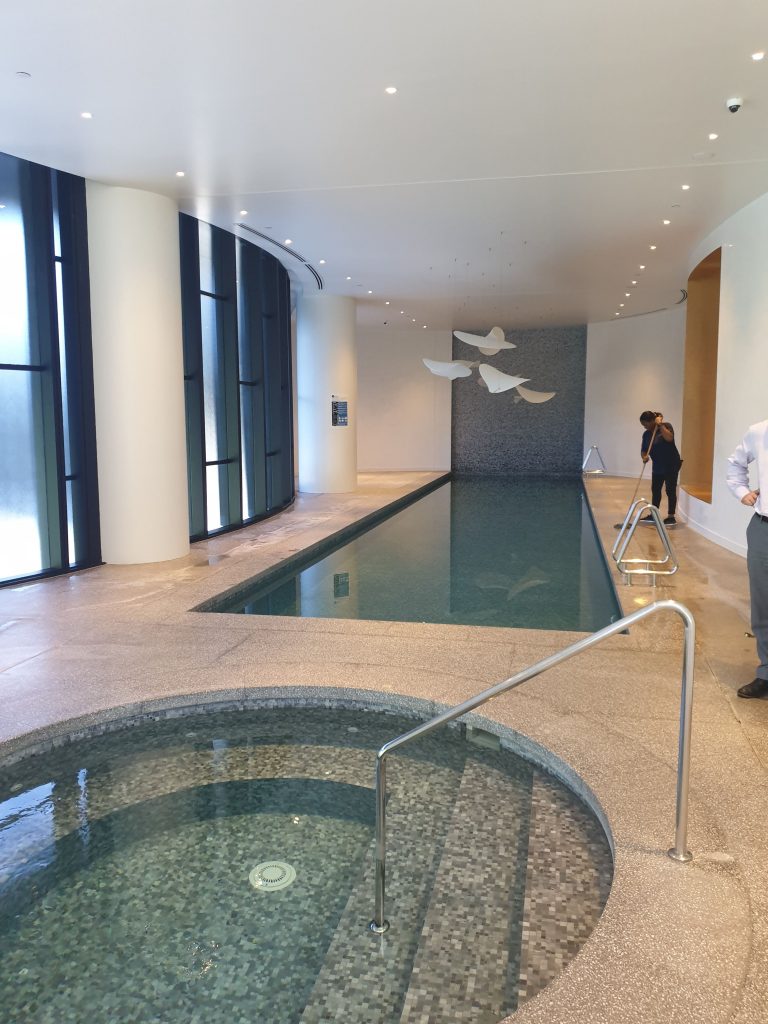
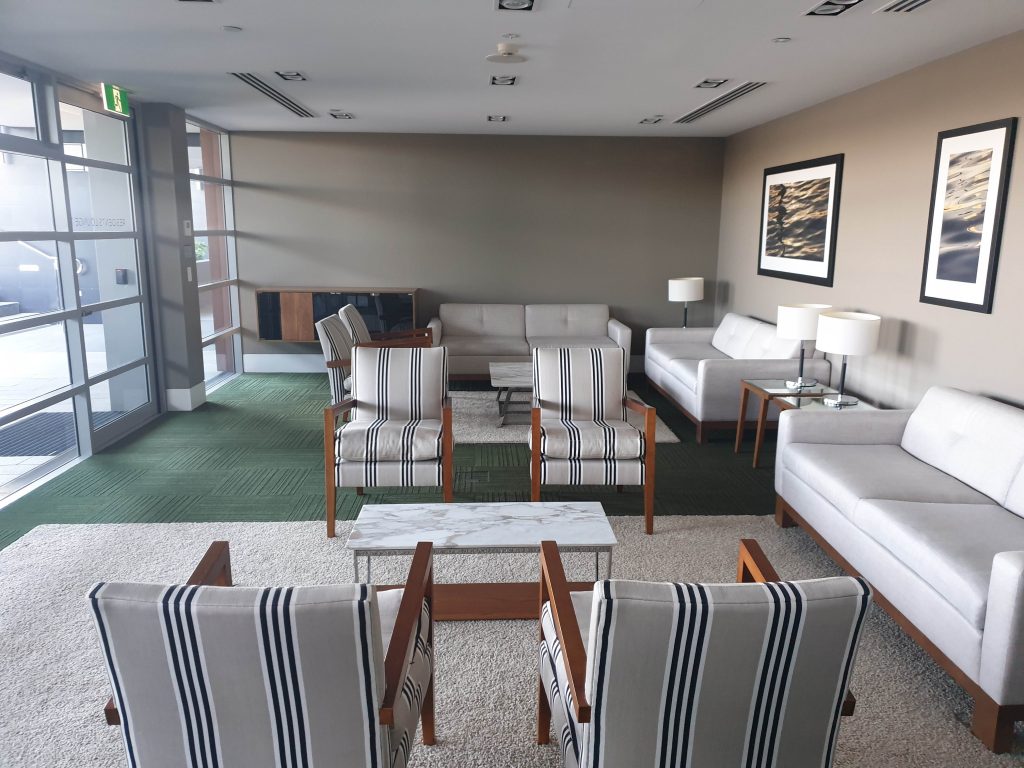
Resort facilities at Abian Brisbane by Sunland – we are the Building Manager and concierge at this stunning developmentMulti-purpose common room at Pier on Waterfront by Mirvac
We are about to settle on some new developments in the Newcastle region and as part of this, are planning the events we will be undertaking with the residents. In addition to this, we will be suggesting a program of activities to the strata committee that they should consider throughout the year.
These are some of the things we are thinking about doing – in Newcastle we are blessed with generous shared spaces at buildings that lend themselves to these types of activity):
Street parties with surrounding buildings – food vans, music, etc.
BBQs (doesn’t get easier or simpler)
Gardening/plants in smaller spaces and common areas with a horticulturalist
Cooking demonstrations (just need to get Harris Farm to sponsor this one!)
Defibrillators (or ‘defibs’ for short) are a hot topic right now – deservedly so as having one close at hand can mean the difference between life and death.
We recently had the pleasure of a visit from Guy Leech who now spends his working life as a defib ambassador (Founder & CEO) for Heart 180, one of the worlds leading suppliers of defibs.
Defibs have started to become common in larger strata and community schemes (particularly in pool/gym areas), however, we believe they should be common at any size scheme because of the concentration of residents and the absolute difference they can make in the event that someone has a Sudden Cardiac Arrest (SCA).
As we get further into the needs and wants of those living in strata and community schemes, we see health and safety as one of the paramount (but passive) issues for residents. Defibs have a very important role to play in the area of health and safety and we’ll be spending a lot of time in 2020 and beyond talking to building owners and developers about the benefits of having these onsite.
We are all about smarter buildings and this is the key to making ‘heart smart’ buildings.
The following is a fact sheet that we prepared with the guys at Heart 180.
Sudden Cardiac Arrest is the leading cause of death in Australia. Having an accessible Defibrillator in your building can make the difference.
A Sudden Cardiac Arrest (SCA) is a condition that occurs when the heart
unexpectedly stops pumping. Each year, SCA strikes approximately 30,000
Australians.
Unfortunately, only around 6% survive, often because help cannot reach them in time. The average ambulance response time is between 9-14 minutes. SCA is not gender or age-specific!
Without defibrillation, for every minute that passes, the chance of survival is reduced by approx 10%. Application of pads on patient within 180 seconds increase the survival rate to over 70%. With good CPR & a defibrillator up to approx 90% survival rate.
We are in an increasingly cautious world and one of the
protections that can be provided to residents is an accessible defibrillator
located in key common areas, that they are able to access in the event that
someone is having a cardio event, giving them a chance at survival.
What are they
Defibrillation is a technique used in emergency medicine to terminate ventricular fibrillation or pulseless ventricular tachycardia. It uses an electrical shock to reset the electrical state of the heart so that it may beat to a rhythm controlled by its own natural pacemaker cells. A defibrillator is a commonly used medical device which can deliver this shock. A defibrillator delivers a set amount of electrical shock to the heart after it analyses the heart rhythm. It determines whether a shock is required to the heart via adhesive electrode pads attached to the person’s chest. The shock delivered by a defibrillator interrupts the chaotic rhythm of the heart and gives the heart the chance to return to its normal rhythm.
The Devices
The common defibrillator is highly advanced and will guide the user through the process. A device cannot be used on people without a cardiac issue. The Heartsine samaritan PAD 500P AED (Automated External Defibrillator) with integrated CPR Advisor meets the needs of two key links in the chain of survival. Not only can the SAM 500P deliver a lifesaving shock, it provides real-time visual and verbal feedback to the rescuer on the force and rate of CPR compressions during an SCA resuscitation – effectively assisting the rescuer to perform CPR. Defibrillator’s assess the status of a person’s heart and will not shock a normal heartbeat.
Training for using defibrillators
Anyone can use a defibrillator – it is just a matter of following the voice prompts provided by the unit. However, training is recommended to give the user greater confidence. Heart180 provide an online CPR & Defib course or can arrange face to face training.
Where they should be installed at a building
Defibrillators should be able to be accessed by a rescuer within 180 seconds of a person having a SCA anywhere in the building. This means locating devices as close as possible for quick access by all units – if not every floor, in ground floor/lobbies, recreation areas and possibly lifts.
Maintenance
Minimal maintenance required – will need to be serviced if discharged, however the devices have an 8-year warranted life span with a battery replacement at Year 4.
If you have
a SCA in Australia outside of hospital – the survival rate is around 6%.
If you have
a SCA in Seattle (US) outside of hospital where defibrillator use is common –
the survival rate is around 64%.
Parkrun
Australia (Case Study)
Parkrun
organise free, weekly, 5km timed runs around the world. They are open to
everyone, free, and are safe and easy to take part in. Heart180 have supplied
225 defibrillators over an 18-month period to Parkrun Australia.
The first
save at a Parkrun in Australia occurred 3 months after Heart180 began supplying
defibrillators.
Proper cleaning of strata buildings is all-important to presentation and in turn, value (you don’t show a dirty house when you have it on the market, and buildings/communities invariably always have property on the market for sale/rent) – poorly maintained common areas that you can see, can well mean poorly maintained areas you can’t see (roofs, plant/equipment, etc).
Whilst having an all-important role to play in the value of a building, cleaning is also one of the lowliest paid professions and it can be hard to tie those performing the duties (who are often transient, casual workers) to the outcomes of the building and the organisation they work for.
Furthermore, many cleaning companies practice wage theft (which there have been recently publicised crackdowns on). I have heard of some cleaners being paid as little as $15 an hour (close to half the minimum wage). There is a common practice of sub-contracting in the cleaning industry where in some cases the cleaning contract is sub-contracted multiple times over and whilst a cleaner might cost $50 per hour they are seeing less than $20 of this. This practice is abhorrent and must cease.
Strata and Community schemes which don’t make relevant inquiries to ensure the cleaning companies they use are paying award wages are complicit in the above practices.
We use a handful of cleaning companies in Newcastle and the wider Hunter region to clean the schemes we manage and we are happy to recommend them as we know as they:
pay at least minimum wage;
supervise, encourage and properly train their staff;
ensure their staff wear uniforms (so residents have some assurance that someone new onsite works for the cleaning company they employ);
use commercial-grade cleaning products;
respond quickly to issues raised by building managers, ourselves and the committee; and
offer a range of additional cleaning services, such as pressure washing and window cleaning.
I spoke with David Kent of Skyline Contracting to get an understanding of what goes into an hourly cleaning cost and he gave me the following information:
“We charge $55 an hour and a breakup is below: • $26.03/hour for a Casual Cleaning Employee (Casual is very common in this industry); • Super is $2.47 per hour; • Cleaning Long Service Leave (Special Government program to ensure cleaners get LSL because the trend is cleaners change companies regularly and never have the opportunity to earn LSL) is mandatory and needs to be put away at 1.7% of all ordinary earnings ($0.44 per hour); • Workers Compensation Insurance & Public Liability Costs (difficult to calculate per hour but we pay $15-16K per year.); • As part of this price we cover all chemical costs required to perform all our normal duties. Depending on the chemicals required for the job sometimes we could consume one $10 bottle of chemicals across a month. Or we could use a $60 bottle of chemical across 2 shifts; • In our pricing, we supply all the necessary equipment to complete the job. We also spend money on a regular basis to retag equipment, clean filters, replace certain parts and service our petrol-powered equipment to ensure our equipment is reliable, safe to use and won’t let us down while providing a service to our clients; • This applies to our fleet of vehicles, we need to ensure safety by maintaining our vehicles and making sure we can arrive at jobs promptly. The above price covers all our travel expenses; • Under our employment is our Cleaning Manager. They are responsible for ensuring our team of cleaners are always trying to do the best job they can and always trying to improve. They are responsible for Never-Ending Education & Training, Maintaining Team Morale, Speaking with our Customers, Empowering our Staff as well as looking for ways to grow our team. • We pay for some awesome software to efficiently track our clients needs, our workloads and make it easier for the team to provide awesome service – $310.00/month; • Premises to run our team from for office staff, storage of chemicals/consumables and to safely store our equipment/vehicles/trailers. A conveniently located workshop where we can all meet at the start of the day, liaise with each other, pack any extra equipment/chemicals we need for the day and somewhere to maintain our equipment. • Marketing…. • We want to have enough left in our budget that if we need to stay a little longer to leave the place looking fabulous we don’t need to rush off and we can ensure our clients will be happy after every visit. • Then, of course, leave some money to remain profitable“
Until we have robots cleaning the buildings we manage, we will continue to seek out the best in the cleaning business – ethical companies that treat their staff fairly and apply the same level of client care that we do.
I separately spoke with Kaleb Paten at Pacific Maintenance Group about their approach to the cleaning business:
“As innovation and technology become more common and essential in all aspects of building management it’s imperative that buildings select a company that is focussed on providing the highest standards of cleaning.
Buildings often have daily cleaning requirements (or require attendance multiple times per week) and as such, the cleaners are the eyes and ears on the ground to relay important information back to the strata/building manager and the committee so that any issues may be attended to promptly (this isn’t just left to residents).
It is the ongoing theme that ‘cleaning will be automated by bots’ and yes, some areas of cleaning will be completely outsourced to robotic technologies. We saw this technology at the 2019 ISSA cleaning expo in Melbourne and this seems the best solution for open space cleaning (e.g. shopping centres).
We believe that the cleaning of strata buildings and community schemes will largely continue to be undertaken by humans who can clean to the highest level and effectively communicate outcomes to their business and the community.
In a business where there are so many moving components, changes to scope are frequent and it pays to have a well-spoken, well-trained professional onsite who will be able to perceive and help generate the best outcomes for the community.
For this Industry to further grow and make progress, there needs to be a transparent and humane approach to improvement.
Companies undercutting other competitors and making a profit ONLY by bringing in illegal labour will be the first exposed, it’s approaching 2020 and modern slavery is unacceptable, these companies will be the first to go as the consumer market seeks transparency and exposes malpractice.
As consumers, it’s key that we understand who will be the persons undertaking the work we are asking the cleaning company to perform and the conditions under which they work.
Progress comes from collaboration, let’s get rid of the companies who exploit people, let’s have open communication with clients and suppliers and let’s be open with pricing and educate on why costs are what they are.”
It was great to get collaboration from both David and Kaleb on this blog, which is an effort to help educate our clients and the wider market to understand the potential differences between what they are paying for and what they are receiving.
Any strata building is complex. In a single day, there might be a range of issues requiring the input of professional managers and specialist contractors.
The average size of strata schemes has increased dramatically in recent years; whilst 40 lot buildings used to be considered large strata schemes (and contain c. 80-100 residents), it’s now common to see 300+ lot strata buildings, with potentially over 600-800 residents. This isn’t only a Sydney/Melbourne metro phenomenon – it’s an urbanisation issue impacting Brisbane, the Gold Coast, Newcastle, Canberra, Adelaide, etc.
This has changed the landscape for strata and facility management and there are constant calls for higher skill levels than were once required. These communities are complex, have massive budgets and the skills, software and contractors required to manage them are comparable to that required for very large commercial buildings. This is also a time of machine learning and soon we will (hopefully) say goodbye to repetitive/mundane administrative tasks which pain the strata and facility managers of today.
Additionally, strata committees used to be able to do a lot of legwork at a building and it was common to see them made up with people who had time, rather than specific skills. Successful strata committees of today are made up of experienced professionals who have owned in multiple buildings, are experienced and knowledgeable about their obligations and functions in sitting on a committee and know the benefit of solid independent management and advice.
It’s now more common for smaller buildings to have the input of both a strata manager and building manager, as these buildings understand the benefit of an onsite professional and their input in the context of the complex facility which the owners are expected to manage.
The strata manager of the future is a relationship manager and master administrator supported by a well-resourced, technologically abled and specialised head office – they understand that they need to help buildings make good decisions and they arm them with the appropriate information to do so and they ensure transparency, accountability, compliance and process. They are great at communication by myriad means, cost planning and running meetings.
As noted, many of the traditional strata functions are becoming automated, however the role of the strata manager is expanding and diverging into that of the facility manager.
Strata companies with FM capabilities are ahead of the curve, as they understand and have close involvement in:
asset maintenance/management. Compiling asset registers, advising on and arranging routine preventative maintenance.
Community building
Sustainability and energy/water management
Emergency planning and relief/management
Prompt communication with occupants by different means
Focus on building security
Can assist with economies of scale
Defect management
Development advisory – how will people live in the asset?
Ensuring contractors have undertaken work correctly, assessing the payment of invoices
Remote access and management
Ultimately, strata and facility management (in both strata and community schemes) will converge, with most full-service strata companies having an inhouse facilities management business to truly support the strata living experience and expectations of today’s occupiers.
The strata management company of tomorrow (that wants to manage the communities of tomorrow) is well versed in facilities management, with the inhouse skills to manage the building fabric and the ever changing needs of its occupants.
As of 2018, there was 316k strata and community schemes in Australia – that means at least 316k people sitting on strata committees (granted some may sit on many, however, some buildings have up to 9 members).
Conservatively, let’s say that there are 500k people sitting on voluntary strata and executive committees across Australia – dare I say, this would have to be the quickest growing membership of any type of voluntary committee, Australia-wide.
In my time as a strata manager, I have worked with high performing committees and low performing committees. There’s no formula to what creates a good committee for a scheme and often a scheme will need to go through pain for good people to come out of the woodwork and jump on a committee.
A committee should:
spend money, not penny-pinch;
try and be as efficient as possible and respect peoples time;
defer to experts as required;
have a basic knowledge of the Act/s under which they operate;
make sure they have liability insurance;
communicate openly with owners and occupants; and
meet relatively often and deal with decisions at properly convened meetings
These hundreds of thousands of strata and executive committee members:
are unpaid (generally);
don’t know each other well;
often have disparate interests;
share little in common other than ownership of a strata or community title lot;
may have a lot of time on their hands or little time;
may have experience in being on professional committees or it may be their first experience; or
might want the best for their community or might be there for only personal interests or a vendetta
There’s no easy way to address the above issues – I believe that committees are getting better as they now have more experience and better access to information. However, I believe that all committees would benefit from considering a flatline management structure (which works incredibly well in business and high-performance voluntary organisations like sporting clubs).
We have prepared a brief overview of a flatline management structure for schemes we manage to consider, which could work for your own. Committees should be the realm of those interested, with the requisite skills to push issues in the right direction, who defer to experts rather than ignoring them and who sponsor each member’s interests, skills and passion rather than operate by the ‘many chefs in the kitchen’ mentality.
Solar is fast becoming the in-demand sustainability and energy efficiency initiative for strata buildings in the Hunter region.
Once a building has considered and undertaken ‘low hanging fruit’ efficiency upgrades to lighting, HVAC, etc. – solar is generally the next pillar for consideration.
We all know that the climate in the Hunter region is fantastic year-round, with (300) sunny days per year; this, in turn, makes for fantastic solar energy production.
We have helped arrange the installation of solar at a number of buildings we manage and we’ve had fantastic support from the owners and results for the owners corporation in doing so.
Strata buildings in the Hunter, Lake Macquarie, and Newcastle region have features that lend themselves well to the installation of solar:
Flat roofs without plant and equipment, on buildings with a relatively large footprint (there are not many towers in the area like you find in Sydney metro areas);
limited over-shading from other buildings (e.g. commercial buildings like you get in many parts of Sydney) and trees;
Relatively limited demands on common property power – lighting, garage doors, lifts, HVAC – thus a rooftop solar system is generally able to offset this completely;
Payback periods as short as 4-5 years based on current power charges – this will shorten again if rates continue to rise (which they likely will with the closure of power plants);
The indicative lifespan of solar systems of c. 25 years, with very little maintenance;
Ability to reduce demand on the grid, which can be stressed during summer when people are running air-conditioning and other appliances; and
A greater focus on cleaner/smarter energy than there’s ever been.
The process for getting solar on your building is relatively simple:
Strata Committee arranges for assessment by a solar installer (make sure you find one that has done strata work previously). There may need to upgrade to the electrical board and wiring to allow for solar;
Provided the building is suitable (some are not due to the shape of the roof, over-shading, plant and equipment on the roof or the orientation of the roof), competitive quotes are sought based on a suitably sized system for the building.
We suggest having an independent third party such as Sustainability Now or Wattblock (here’s a great white paper that WattBlock did on solar – certainly more informative than this particular blog) – tender the work and give a recommendation (there are so many types of panels and inverters and you want to ensure what you are getting is suitable);
Work out how the system will be funded – special levy or out of existing funds (what has worked well at other buildings is using capital funds to purchase the system and then allocating additional funding in future years to repay the system cost from the savings in electricity in the administrative fund);
Put relevant motions to a general meeting for funding and the addition of solar to common property; and
Once agreed by the meeting, proceed with the work and start experiencing the amazing cost benefits of solar.
Committees and managers should ensure that the solar system is monitored so that you know it’s producing power. There’s nothing worse than having an expensive solar system on your roof which has tripped and nobody is any the wiser. There are now SIM solutions for this at a minimal cost and an alert goes to the strata/building manager/retailer or committee if the system isn’t operating as it should.
There are also some alternate models out there involving leasing the solar equipment and the lessee being able to provide occupants clean power at a discount.
Battery storage technology is getting better year-on-year as well, so there’s every prospect of mating battery with solar to ensure that a building will only draw power from the grid in off-peak periods.
It’s also noted that strata schemes made up of townhouses can likely obtain all the benefits of solar on a per-lot basis (or potentially group together for the installation of a larger system with battery technology – there’s every opportunity for an off-grid development in the Hunter of this type in years to come).
At Bright & Duggan and Cambridge Management Services, we would be happy to have a chat with anyone about the process and the benefits.
I recommend that every owners corporation (or community scheme) takes time periodically to reflect on the way it’s managing its affairs.
This isn’t just going through a process to look at a change of strata managers or building managers (in fact I advocate that people stay with their service providers and try and resolve small differences, rather than move to save a few bucks and lose a whole lot of knowledge in the process).
I have noted a few different areas of focus for a ‘health check’. Some of these are relevant to all schemes, others are overkill for smaller schemes.
Management
Is the current strata and facility management operation optimal – what other options exist in the market (services performed directly or virtually)? What are the costs of alternative services/structures?
What software exists that may be able to improve the running of the community?
Are your service providers professional, value for money and do they know the building/community?
What are the provisions for out of hours/emergency events?
Financial matters
Does the building budget program (which needs to be looked at over a multiple-year period) align with the capital works fund?
Are there possible savings that can be made (contractual or otherwise)?
How does the budgeting process work on an annual and ongoing basis?
How are invoices coded? Are work orders generated from the relevant cost centre?
Governance
How regularly does the committee meet – are these meetings productive (i.e. are issues being resolved or are they ongoing)? Do the meetings align with meetings for other entities of which the scheme forms part (e.g. BMC).
What introduction/guidance do new committee members receive to being on the committee? The Fair Trading Strata/Community Living guide should be required reading for anyone in strata or community title (let alone those who live in a strata scheme within a community scheme!).
Is there knowledge amongst the committee members which should be recorded/held to be accessed if member sells their property or is otherwise unavailable?
Are relevant sub-committees being formed?
Technology/other matters
What technology does the building have available to it to improve the management of the building (e.g. data logging, automated reporting)?
What sustainability upgrades exist – should the community consider obtaining a NABERS rating?
What security upgrades should the building consider?
Would the building be best served with a professional building manager?
Strata Schemes are basically the Luddites of the built environment. Older buildings have very little that is ‘smart’ about them and builders/developers (particularly when it’s a design/construct contract and cheap/cost-effective is the only option) are generally not incentivised to install the latest and greatest technology into buildings.
The current status quo is a shame; there is amazing technology out there and on the way that strata buildings could be taking advantage of, to manage security, control costs, monitor building health and greatly enhance the resident experience.
Some highlights with potential uses for strata buildings/community schemes:
Robot Sentry
Yes – this looks like a Dalek, but that’s kinda the fun of it.
Dalek/sentry.
Perfect for checking car parks and large flat outdoor areas, particularly at night. Could take the place of a need for having multiple security guards onsite.
Future potential uses I can see for this technology at buildings include checking plant and equipment is operating properly, administering move-ins, checking by-law breaches, cleaning standards (or doing the cleaning?), etc.
Keys as a service
Not a great photo – but you get the picture!
This is interesting tech – doing away with keys/swipes for entering buildings and using facial recognition to gain entry. This gives much greater security and assists management with knowing who is who in a building, particularly if there is an incident.
Secondly, the days of the intercom as we know it are numbered (along with associated cabling throughout a building).
With some new internet-connected door stations, there is no need for a connection to apartments – the request goes over the internet and to an internet-connected handset, or to a phone/tablet anywhere in the world. This is exciting technology, which will offset capital costs for developers and future owners and give a huge amount of flexibility in granting entry to a building. There are many potential applications for this; getting away from building keys/swipes is the future.
CCTV – Video Analytics
Video analytics technology in action
This is pretty amazing tech – watching it in action at ASIAL reminded me of the Will Smith “Enemy of the State” movie (ha – how is that 20 years old!).
The video analytics software now on the market really needs to be seen to be believed. Instead of someone needing to spend hours reviewing footage, potentially on multiple cameras – the analytics behind it can be used to pick up all instances of a person or a thing occurring (e.g. a package being on a table and) and it will continue to drill down based on the information you give it.
Obviously, the concern here from a residential perspective is privacy concerns, however, used properly and within defined boundaries – this could serve to greatly increase security and augment the ability to manage buildings.
This technology is now hugely reliable and more cost-effective than your average sensor/remote system.
Number-plate recognition would be my choice, given the flexibility of controlling visitors parking and also having all cars in a database. Anything that helps with the dreaded visitors parking! There is a degree of management involved with such a system (which should be minimal after a building is settled given residents don’t change that often), but once established it should be no harder than programming and issuing passes/remotes and can be done remotely, in an instant.
RFID window tags are great as they are very cheap (about $6 versus a remote costing $50+). These can also be administered remotely, however, a physical tag must be issued in the first instance.
I look forward to sharing these insights with owners and developers – we can’t be far away from seeing this technology as standard in new buildings. Access control and a basic CCTV system doesn’t cut it anymore!
I am not going to start on building defects – that is a topic much maligned by the media at the moment (who are having a feeding frenzy on Mascot Towers after the Opal Tower hysteria died down).
Instead, I am making a list (which I intend to update over time) of some typical oversights I see from builder/developers in the handover of strata buildings to the strata manager and the owners corporation. When considered as part of the development process and during construction, all of these things are cost-effective or free. Some will be relevant for all buildings, where others will not.
We work with builders/developers closely to ensure that these matters are thought through, early in the piece.
Mailbox Locations – Put them in a central/secure area. Australia post permits and encourages this for multi-residential. The next wave to think about is parcel delivery and we are working on solutions for unstaffed buildings (without a full-time building manager/concierge).
Colour coded/secure letterboxes at nook apartments Wickham.
Cleaners Room – Does the location make sense? Is there adequate space in the room for storage? Space to wash a mop? Proper drainage?
Facade and Garden Access – If height access equipment is needed to access the facade/windows and certain gardens, anchor points should be installed. If these aren’t there at handover, there’s no ability for the OC to maintain and a new building starts to look terrible whilst the argument over who is to install them takes place.
Access control/keys – The ability to program access devices onsite or remotely is key (pun intended), along with ensuring that we know who receives what device (so these can be removed from the system down the track if a person has left the building/not returned the device, lost the device, etc). Restricted key systems are good in some ways (security and the ease of having specific keys cut down the track) and a burden in others (locked into a specific locksmith, delays in obtaining keys). I see key/access device technology changing in the near future with phone/voice/facial recognition becoming more common. Ideally, access control equipment and CCTV equipment is wired to a secure central location.
CCTV – The installation of cameras in the focal areas of a building is cost effective and incredibly important. At a minimum, the garage entrance, any foyer entrances, the mailboxes, and any common recreation areas should be covered. CCTV is a great deterrent to bad behaviour and a potential audit trail when things go wrong. Speak to my friends at Quorum Security.
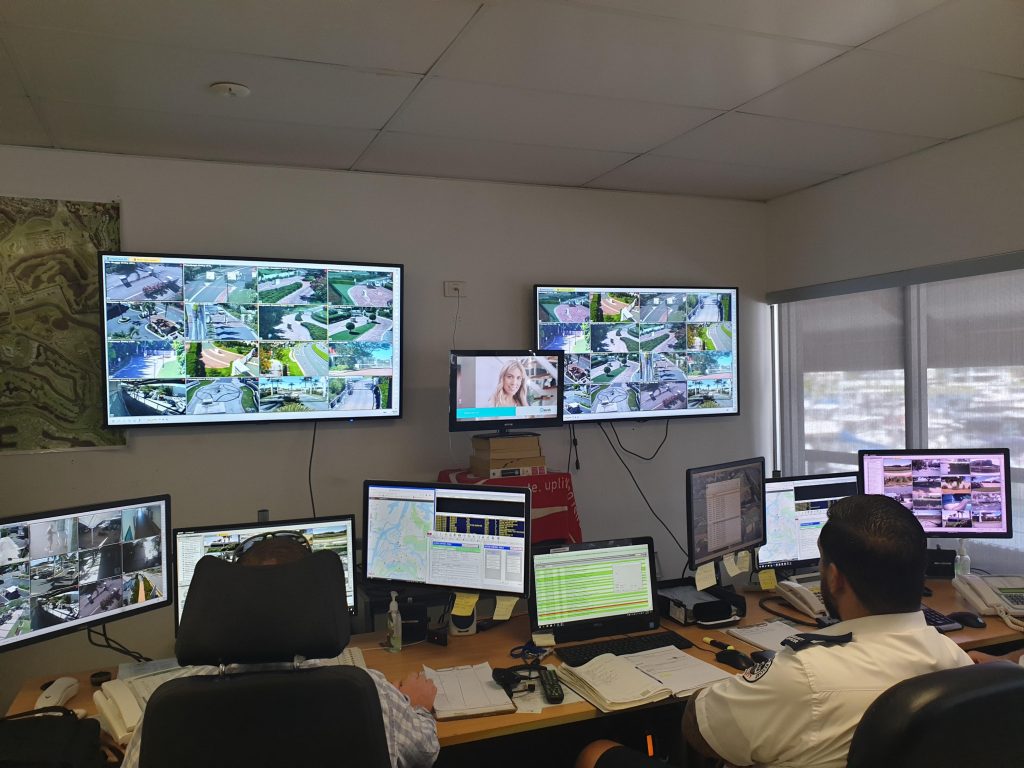
Security control room at Hope Island. Hope Island is managed by Cambridge Management Services.
Keyboxes/Remote Access – How do contractors get onsite in the event of an emergency or when (if one is appointed) a building manager is not there? It’s vital to have a secure keybox onsite to get people into the building.
Internet – Nearly every building should have an internet connection! Programming devices offsite, remotely viewing CCTV footage, administering a digital display/noticeboard, shared internet connection for common areas, building management – these are some of the many reasons you would have the internet at a building.
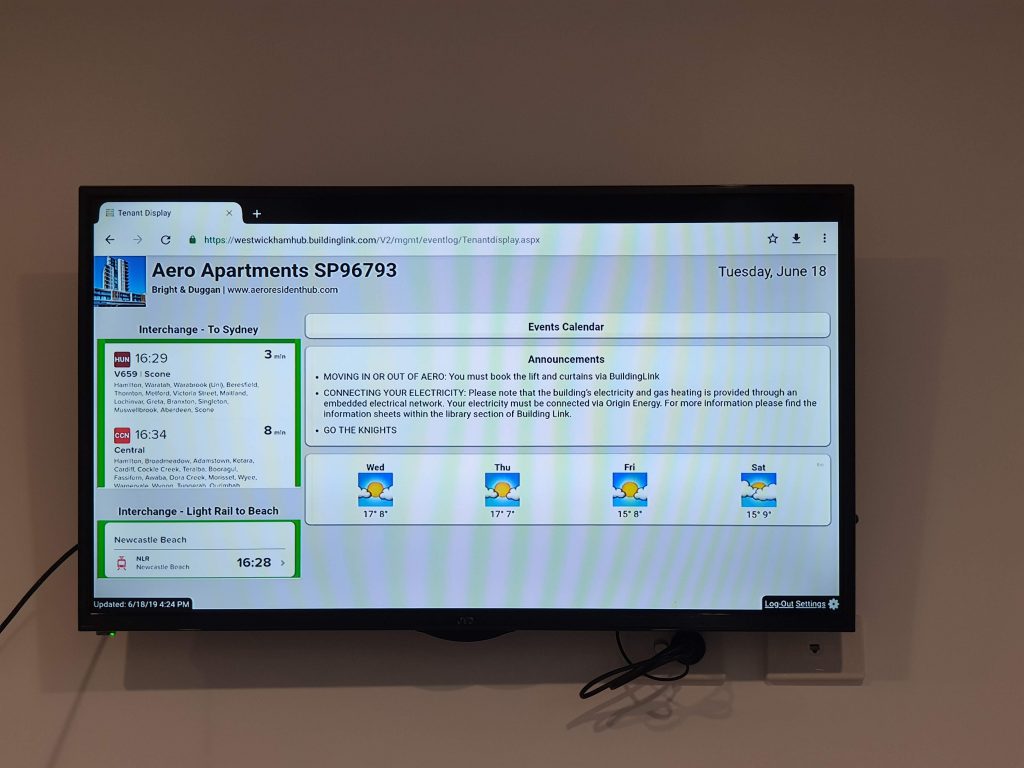
Noticeboards – Ideally installed in a central area, such as the lift or car park. Down the back of the garbage room isn’t ideal.
This is how you do noticeboards for foyers (don’t mind the cords – this is just testing in the office).
Lift Curtains – If the building has a lift, lift curtains must be provided from the start to prevent damage (particularly with the huge influx of residents moving in the first few months).
Lift Cabling – It’s inordinately expensive to have a lift company run data cable to a lift for access control or CCTV once a lift is in-situ and operating. If it’s provisioned during the construction phase, it’s very inexpensive.
Moving Plans – What is the plan for residents to move in – times/days/how many at once, etc? You can administer this well through the use of BuildingLink
Signage and Communications – Whilst building operation may seem plainly obvious to a builder/developer, to many residents it may not be. Proper signage/instructions for contacts, moving, rubbish, etc is vital.
Bins – Speak with Council (or private waste provider if non-Council collection) as early as possible to ensure that bins arrive well before residents do.
Retail Lots – Where there are retail lots at a scheme a fit-out guide should be designed and relevant by-laws put in place. This protects the individual interests of the retail/residential owners.
It was an excellent Strata Community Association national conference in Auckland – I am still recovering from it (in a few senses) a week and a bit later, which is why the delay in posting.
Here’s my top 10 from the week
Bright & Duggan winning the National Strata Manager of the Year award (along with Strata Data). Well deserved accolade, reflecting the hard work of Bright & Duggan and Cambridge, across the Eastern seaboard.
Bright & Duggan winning National Strata Manger of the year 2019 – Chris Duggan accepting the award.
2. Clare Stuart of Bright & Duggan QLD winning the SCA Community Manager of the Year – Rising Star award.
Congratulations also to Cambridge Victoria for their nominations for Strata Community Management Business of the Year – Small and Briana Edgecombe for her nomination for Support Team member of the Year.
Clare Stuart of Bright & Duggan Queensland winning the strata community manager of the year rising star
3. Sir Bob Parker presenting the keynote on providing reassurance in times of need. Very chilling videos and photos of the Christchurch earthquakes.
What Christchurch experienced during that time certainly gives context to how bad times can be, for factors completely beyond your control.
4. Tuesday night welcome event at the Auckland war memorial and an awesome dinner afterwards with colleagues at Baduzzi – must visit if in Auckland.
5. The Impact of Design and Development – Matt Davis from Davis and Davis Architects. Whilst the keynote was quite winded, it was incredibly interesting as I move professionally into wanting to understand how buildings function for the benefit of their occupants. Did you know that design is only 0.5% of the cost of a building’s lifecycle, and operating costs 85%?
6. Getting some exercise in with colleagues and commuting to and from the venue on a lime scooter – lots of fun. Must bring these to Newcastle!
7. Sustainability presentation from City of Sydney. I have been big on sustainability and efficiency for strata schemes for many years – the topic is now a very mature one and front of mind given the introduction of NABERS ratings in the residential space.
It’s less efficient to live in an apartment than a house, which should not be the case.
More green walls and solar please!
Check out this cool article I read yesterday about green walls.
8. Macquarie benchmarking data presentation. The data has been out for a few months but it was good to digest again to understand where we sit as a business versus competitors and where we should push towards.
Attracting, retaining and continually engaging great staff is key – what’s the point in growing a business if you can’t do those things?
Also interesting is the push towards diversified revenues. Strata management companies shouldn’t be in business if they’re only profitable due to disbursements and insurance commissions.
9. Sharing times and a few drinks with friends from NSW and interstate and meeting a number of other industry stakeholders.
10. Getting a better understanding of where we sit as a business versus the industry – Bright & Duggan is a great business (and this is now nationally recognised), but constantly reflects on the way it treats its staff and serves its clients. These two factors are far more key to profitability than bringing on new business or slashing costs.